Framing contractors and finish carpenters in Iowa are among the busiest and most skilled tradespeople in the construction industry — and among the most undertaxed-in-a-bad-way. That's not a typo. Undertaxed in a bad way means overpaying, not the good kind of undertaxed.
Framing and finish work creates dozens of legitimate, powerful tax deductions — and most framing contractors are missing a significant portion of them. Power tools, air compressors, nailers, chop saws, table saws, ladders, trucks, trailers, job site material — every bit of it is deductible, but only if you're working with someone who knows how to structure and document it correctly.
We are Performance Financial CPA, Accounting & Tax — a Des Moines CPA firm that specializes in serving Iowa and Midwest construction contractors, including framing companies and finish carpentry businesses. We focus on aggressive, legal tax reduction planning, construction bookkeeping, S-Corp structuring, and CFO advisory services.
If you want to know specifically how much you're overpaying, book a Tax Reduction Analysis with our team. We'll show up with real numbers based on your situation.
Here are 9 tax-slashing strategies that work exceptionally well for Iowa framing and finish contractors.
#1 Framing Contractor Tax Strategy: Convert to an S-Corporation
The Biggest Single Tax Change You Can Make
Most framing and finish contractors are sole proprietors or LLCs filing a Schedule C. Every dollar of net profit on that return is subject to 15.3% self-employment tax. At $120,000 in net profit, that's $18,360 in SE taxes — before you even get to income tax.
An S-Corp splits your income between a W-2 salary (subject to payroll taxes) and owner distributions (not subject to payroll taxes). For a framing contractor earning $150,000 net, an optimal S-Corp structure typically saves $10,000–$17,000 per year in payroll taxes alone. The setup, salary optimization, and ongoing payroll compliance are all part of our S-Corp service.
See how this plays out for similar trades in our articles on S-Corp vs LLC for painting contractors and the remodeler's tax blueprint for Iowa contractors.
#2 Framing Contractor Tax Strategy: Section 179 on Tools and Equipment
Buy Tools, Deduct Them Immediately
Framing and finish carpentry are tool-intensive trades. Pneumatic nailers, framing guns, routers, table saws, miter saws, planers, compressors, scaffolding, ladders, and specialty jigs — these are not cheap, and they're all deductible business assets. Section 179 allows you to write off the full cost of qualifying equipment in the year of purchase rather than depreciating it over 5–7 years.
For a framing contractor spending $30,000–$60,000 per year on tools and equipment, this can represent a major reduction in taxable income in the year of purchase. Bonus depreciation (currently 60% in 2024) adds further benefit. We help framing and finish clients time major tool purchases strategically relative to their projected annual tax liability. See our resource on smart depreciation planning for contractors.
#3 Framing Contractor Tax Strategy: Work Truck and Vehicle Deductions
Your Work Truck Is One of Your Biggest Tax Assets
A full-size pickup truck or work van used for business qualifies for substantial tax deductions. For vehicles over 6,000 lbs gross vehicle weight — which includes most full-size trucks — Section 179 can be applied to the entire vehicle purchase price in year one. Alternatively, the actual expense method or standard mileage rate can be used depending on your situation.
Most framing contractors own 2–4 vehicles. Optimizing deductions across the fleet — choosing the right method, documenting business use, and applying Section 179 where it makes sense — can generate $15,000–$40,000 in additional annual deductions. Our team sets up the simple tracking systems needed to protect these deductions year after year.
#4 Framing Contractor Tax Strategy: Retirement Plan Contributions
Pay Your Future Self Instead of the IRS
Framing contractors who want to build long-term wealth while reducing taxes should prioritize retirement plan contributions. A SEP-IRA allows contributions of up to 25% of W-2 compensation (max $69,000 in 2024). A Solo 401(k) allows both employee and employer contributions, often enabling even higher contribution limits.
Every dollar contributed to a qualified retirement plan is a dollar of income that isn't taxed this year. At a 28–32% effective tax rate, a $40,000 retirement contribution saves $11,200–$12,800 in taxes while building personal wealth. We help framing contractors determine the right plan type and contribution level based on their cash flow and goals. See our resource on retirement plan strategy for contractors.
#5 Framing Contractor Tax Strategy: Track and Deduct All Job Materials
Lumber, Fasteners, Hardware — Every Dollar Is a Deduction
Framing contractors buy significant quantities of lumber, LVL beams, hardware, fasteners, adhesives, sheathing, and housewrap — and finish carpenters buy trim boards, moulding, pocket door hardware, cabinet materials, and specialty millwork. Every bit of it is deductible as a cost of business.
The problem is that materials purchased at Menards or the local lumber yard often get mixed with personal purchases, or they're paid for with cash and never recorded. Our construction bookkeeping service ensures every material purchase is captured, assigned to the correct job, and deducted correctly — which improves both your tax position and your job cost visibility.
#6 Framing Contractor Tax Strategy: Health Insurance Deduction Through the S-Corp
Your Family's Health Coverage Becomes a Business Write-Off
S-Corp framing contractors can deduct 100% of health insurance premiums paid for themselves and their families as a business expense — but only if the premiums are included in W-2 wages on the correct line. This is a commonly mishandled item that results in lost deductions every year.
For a family of four in Iowa, health insurance runs $1,400–$2,200 per month. Correctly structured, that's $16,800–$26,400 in annual deductions. The IRS provides guidance on S-Corp health insurance deductibility. Our payroll setup ensures your health insurance premiums are handled correctly from day one.
#7 Framing Contractor Profit Strategy: Job Costing for Every Project
Find Out Which Jobs Are Actually Profitable
Framing contractors often have a mix of project types: new construction framing for builders, custom home framing, additions, and remodel work. Finish contractors similarly work on new builds, high-end remodels, and commercial fit-outs. Each type has a different margin profile, and most contractors don't know their actual per-project profitability.
Job costing changes that. When you track actual labor hours and costs, materials, and subcontractor costs against every project and compare them to your estimate, you find out exactly where you're making money and where you're not. That knowledge reshapes your bidding strategy, your client selection, and your crew efficiency targets. See our deep dive on job profitability analysis for construction contractors.
#8 Framing Contractor Operations Strategy: 1099 Compliance and Subcontractor Management
Don't Let Sloppy Paperwork Cost You Deductions
Framing companies often use subcontractors and day laborers for heavy crew work, especially during peak season. Any unincorporated sub paid $600+ in a year requires a 1099-NEC by January 31st. Missing these filings puts your deductions at risk and creates potential payroll tax liability if the IRS determines workers should have been classified as employees.
We handle 1099 compliance for all our framing and finish contractor clients — collecting W-9s before the first payment, tracking sub payments throughout the year, and filing all 1099s accurately in January. This protects your deductions and keeps you audit-ready year-round.
#9 Framing Contractor Growth Strategy: Year-Round Tax Planning with a Construction CPA
The Difference Between Surviving Tax Season and Controlling Your Tax Destiny
Framing and finish contractors who pay the least in taxes aren't just lucky — they're working with a CPA who is proactively managing their tax picture all year, not just in April. Year-round planning means quarterly estimated tax reviews, S-Corp salary adjustments as income changes, coordinated retirement contributions, and equipment purchases timed for maximum deduction impact.
We work this way with every client at Performance Financial. The difference compared to annual tax preparation is typically $8,000–$20,000 in additional savings per year. Read our year-round tax planning guide for Des Moines contractors and our broader overview of Iowa contractor tax strategies.
Performance Financial — Iowa's Framing & Finish Contractor CPA
We are Performance Financial CPA, Accounting & Tax, serving framing companies, finish carpenters, and all construction trades across Iowa and the Midwest. We specialize in tax reduction planning, construction bookkeeping, S-Corp structuring, and CFO advisory services for small business contractors.
We serve framing and finish contractors in Des Moines, Ankeny, West Des Moines, Johnston, Grimes, and across Iowa.
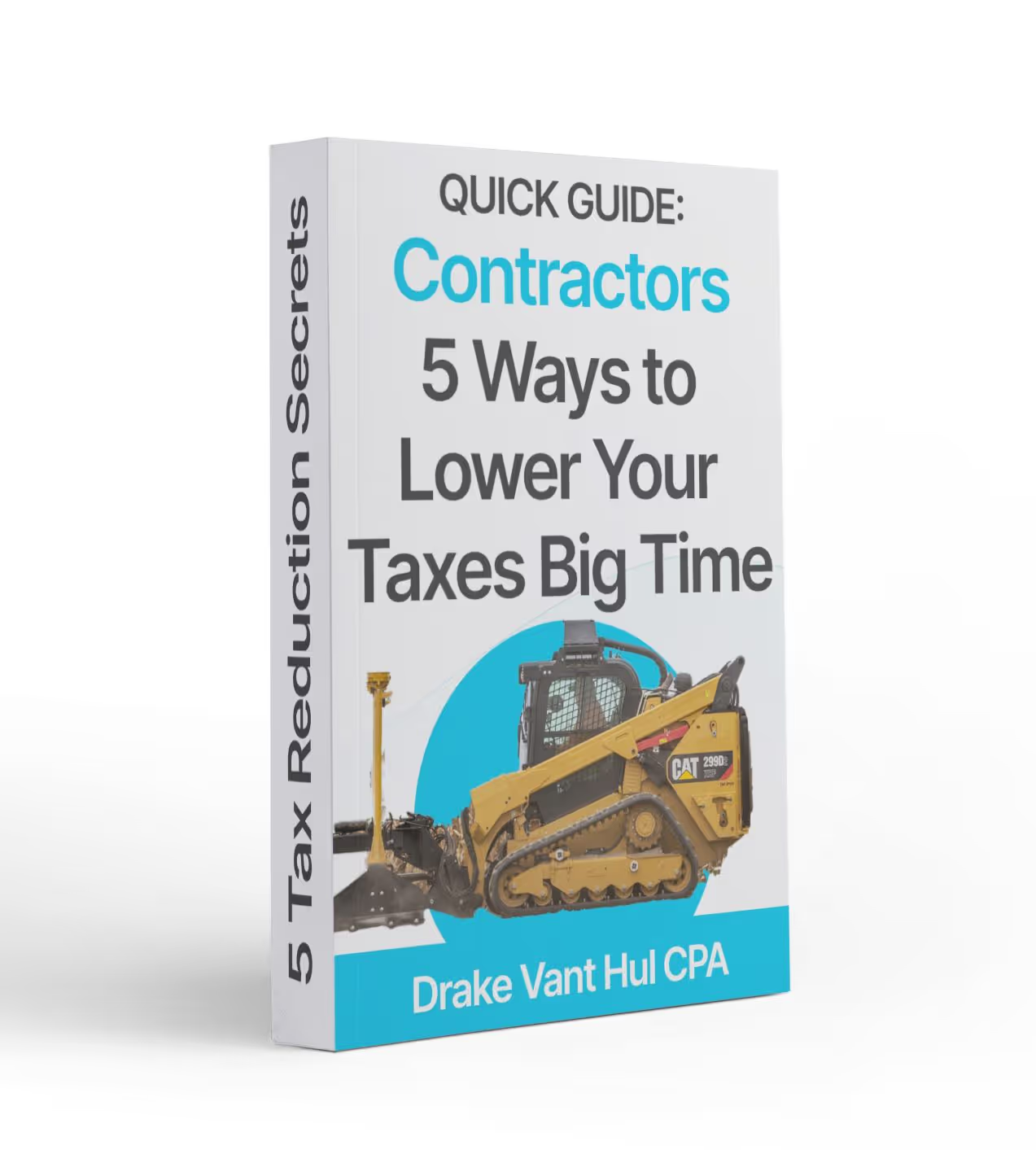
Book a Tax Reduction Analysis today. Download our free resource: 5 Ways to Reduce Contractor Taxes, or read our client reviews.
More Resources for Iowa Framing & Construction Contractors
Schedule a Tax & Accounting Analysis Now
Step 1 - Fill out the form below.
Step 2 - Select a time.
Step 3 - Provide documents.