TL;DR — Quick Answer
A bookkeeper for a small business in Iowa typically costs $300–$1,500 per month for outsourced services, or $18–$30 per hour for part-time help. The range is wide because it depends on your transaction volume, the complexity of your business, whether payroll is included, and the level of expertise you need. For construction contractors and other project-based businesses, expect to pay more — and get a lot more value — than for a simple service business with low transaction volume.
What Does a Bookkeeper Actually Cost in Iowa?
Bookkeeping pricing is not one-size-fits-all, and the cheapest option is almost never the best option. Here's a realistic breakdown by delivery model and business type.
Hourly Bookkeepers (Part-Time or Freelance)
Hourly bookkeepers in Iowa typically charge between $18 and $45 per hour. At the lower end, you're getting basic data entry and transaction categorization. At the higher end, you're getting a more experienced bookkeeper who can handle bank reconciliations, financial reports, and some payroll work.
Part-time hourly bookkeepers work well for very small businesses with 50–100 monthly transactions, a single bank account, and no complex accounting needs. For most growing small businesses, they're not enough.
Outsourced Monthly Bookkeeping Services
For small businesses in Iowa, outsourced monthly bookkeeping from a professional firm typically runs:
- $300–$600/month — Basic bookkeeping for very simple businesses with low transaction volume, no payroll, no job costing
- $600–$1,200/month — Mid-tier: includes bank reconciliations, accounts payable/receivable management, monthly financial reports, some payroll
- $1,200–$2,500+/month — Full-service: includes all of the above plus job costing, WIP schedules, subcontractor 1099 management, and integrated tax planning (typical for construction contractors)
In-House Part-Time Bookkeeper (Employee)
Hiring a part-time bookkeeper as an employee in Iowa costs $18–$25/hour on average, plus payroll taxes (approximately 7.65% employer share), workers' comp insurance, and potentially benefits. A 20-hour-per-week bookkeeper at $22/hour costs approximately $26,000–$30,000 per year fully loaded. You also own the training, management, and replacement costs when they leave.
Full-Time In-House Bookkeeper
A full-time bookkeeper in Des Moines earns $42,000–$58,000 per year according to typical Iowa market data. Fully loaded with payroll taxes and benefits, you're looking at $50,000–$70,000 annually. Most small businesses don't need a full-time bookkeeper until they hit $2M–$3M+ in revenue.
What Drives the Cost of Bookkeeping Up?
Several factors push monthly bookkeeping costs higher, and understanding them helps you evaluate what you're actually paying for.
Transaction Volume
A business that processes 500 transactions per month needs significantly more bookkeeping time than one with 80 transactions. Transaction volume is often the biggest single driver of bookkeeping cost.
Job Costing Requirements
Construction companies, landscapers, remodelers, and other project-based businesses require job-level cost tracking — which means every transaction gets assigned to a specific project. This is substantially more time-intensive than general bookkeeping and requires a bookkeeper with construction accounting expertise. See our explanation of what makes construction bookkeeping different.
Payroll Complexity
A business with 1–2 salaried employees has simple payroll. A construction company with 8–12 hourly workers on multiple job sites, varying overtime, and certified payroll requirements has complex payroll — and that complexity drives bookkeeping costs up accordingly.
Number of Bank and Credit Card Accounts
Each account that needs monthly reconciliation adds time. A business with 1 checking account and 1 credit card is much simpler to maintain than one with 3 bank accounts, 2 credit cards, and a PayPal account.
Accounts Receivable and Collections Management
If your bookkeeper is also tracking outstanding invoices, following up on past-due accounts, and managing accounts receivable aging reports, that's additional scope — and additional value.
Level of Expertise and Tax Integration
A bookkeeper who works under a CPA and integrates their work with proactive tax planning costs more than a standalone data entry bookkeeper. The ROI is almost always positive — but it's a higher price point for a higher level of service.
What Does Good Bookkeeping Actually Save You?
Here's where most small business owners think about bookkeeping cost wrong. They compare the monthly fee to what they were paying before (usually $0, because they were doing it themselves) rather than comparing it to the value it delivers.
Time Savings
Most small business owners who handle their own bookkeeping spend 5–10 hours per week on financial admin. At a conservative $75/hour of your time as a business owner, that's $19,500–$39,000 per year of your time — spent on work a bookkeeper handles for $500–$1,200/month.
Tax Savings
Accurate books that are properly organized and reviewed by a CPA regularly catch deductions that sloppy books miss. We frequently find $5,000–$20,000 in annual tax savings for new clients who come to us from do-it-yourself bookkeeping or generalist bookkeepers who don't understand their industry. See our overview of top tax write-offs for small business owners.
Better Business Decisions
Clean monthly financials give you the information needed to make good decisions about pricing, hiring, equipment purchases, and growth. Business owners flying blind — guessing at margins and hoping the bank account reflects reality — consistently make worse decisions than those with accurate monthly financials.
What Should I Look for in a Small Business Bookkeeper?
Whether you're hiring in-house or outsourcing, here are the qualities that matter most:
- Industry experience: A bookkeeper who has worked with businesses in your industry understands your cost structure, revenue patterns, and accounting quirks. A general bookkeeper who has only worked with retail businesses is not well-suited to a construction company.
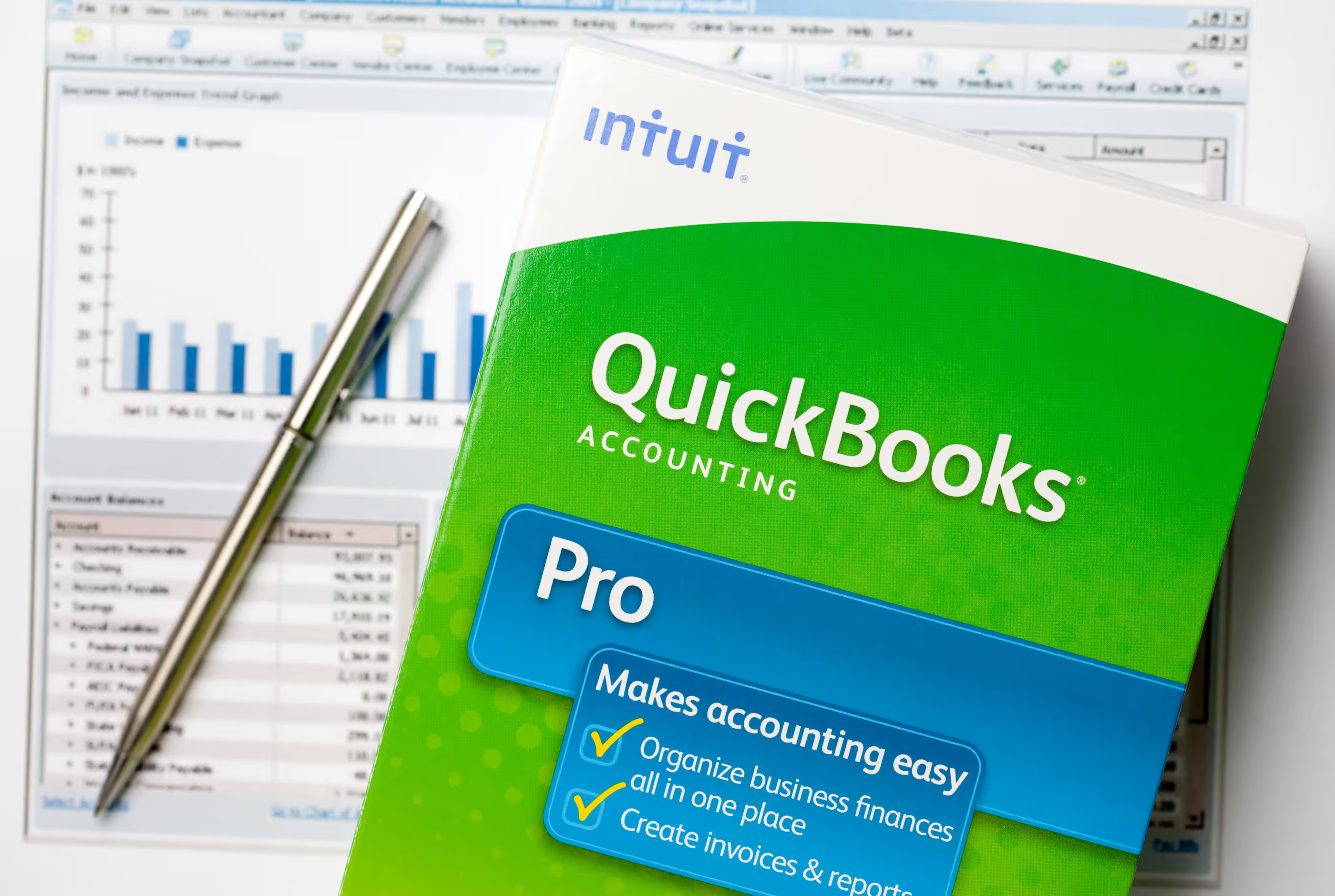
- QuickBooks proficiency: Most small businesses use QuickBooks. Make sure your bookkeeper is genuinely proficient — not just familiar with the basics.
- CPA oversight: The best outsourced bookkeeping services operate under CPA review, ensuring accuracy and connecting bookkeeping to proactive tax planning.
- Timeliness: Books that aren't closed until 60 days after month-end are nearly useless for business management. Look for a bookkeeper who delivers reports within 2 weeks of month-end.
- Communication: Your bookkeeper should be able to explain your financial statements in plain English, not accounting jargon.
See our detailed resource on the best bookkeepers and accountants for contractors.
Is Outsourced Bookkeeping Worth It for a Small Business?
For the vast majority of Iowa small businesses — especially contractors, tradespeople, and service businesses — outsourced bookkeeping from a qualified firm is the right choice.
You get professional-grade accuracy without the cost and management burden of an employee. You get scalability — as your business grows, your bookkeeping scales with it without you having to hire and train someone new. And if you work with a firm like Performance Financial, you get bookkeeping that's integrated with year-round tax planning, so your books are never just a historical record — they're a tool for paying less in taxes.
How Much Does Performance Financial Charge for Bookkeeping?
We are Performance Financial CPA, Accounting & Tax, a Des Moines firm that specializes in bookkeeping services for small businesses and contractors across Iowa and the Midwest.
Our bookkeeping pricing is based on transaction volume, business complexity, and scope of services. You can see our general pricing structure on our pricing page, or better yet — book a Tax & Accounting Analysis and we'll give you a specific quote based on your actual business.
We serve small businesses and contractors in Des Moines, Ankeny, West Des Moines, Johnston, Grimes, Cedar Rapids, and throughout Iowa.
Related Resources
Schedule a Tax & Accounting Analysis Now
Step 1 - Fill out the form below.
Step 2 - Select a time.
Step 3 - Provide documents.